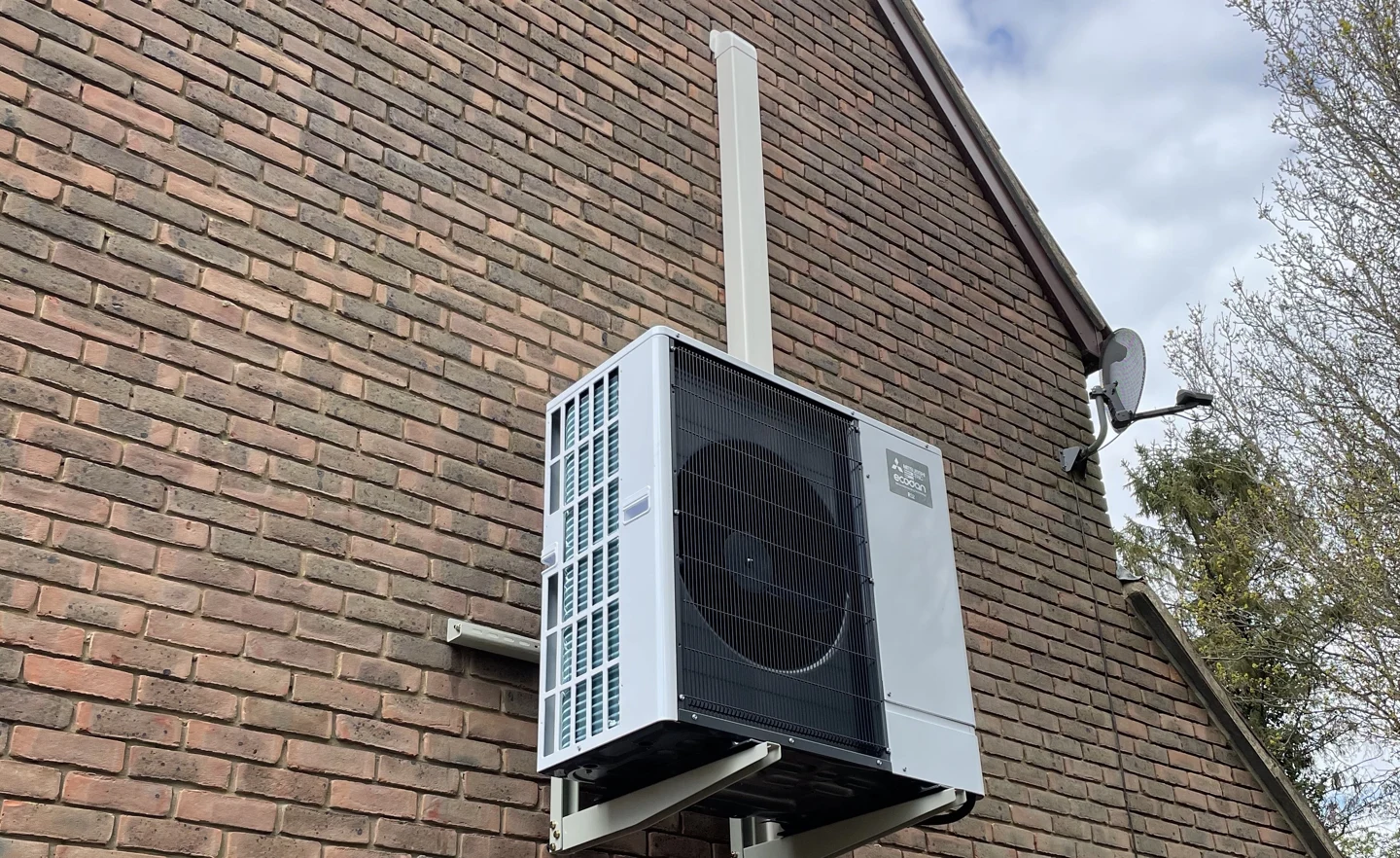

What is the Warm Homes Loan Scheme?
The Warm Homes Loan Scheme helps eligible UK property owners spread the cost of qualifying energy upgrades through participating lenders. Products can include low-interest or interest-free borrowing for work such as heat pumps, solar panels and battery storage. It is a loan that you repay, not a grant or a promise of free installation. The government factsheet explains the national scheme; the offer available to you depends on the lender, your project and its checks.
For a homeowner replacing a gas or oil boiler or considering solar, the useful starting point is the upgrade needed now, a suitable design and a clear installation price. You do not have to buy a heat pump, solar panels and a battery together. Finance can change when you pay the cost; it does not remove the need to check likely running costs or whether repayments are manageable.
Who may be eligible for a Warm Homes Loan?
The government’s basic eligibility rules cover owners of residential properties in the UK, whether or not they have a mortgage. Lenders can set additional conditions and carry out credit and affordability checks. Meeting the property rules does not guarantee a loan.
The proposed work must also qualify. For the heat-pump, solar and battery installations discussed here, use an appropriately MCS-certified installer and confirm the lender accepts that installer and project. Some lenders work through selected installation partners, so certification alone does not establish access to every product.
If you are on a lower income, check whether grant-funded support may be available before committing to borrowing. The government’s loan overview points readers towards relevant grant routes. The similarly named Warm Homes: Local Grant is a different programme with its own eligibility and delivery arrangements.
Can the loan pay for heat pumps, solar panels and batteries?
Yes, these are among the technologies covered by the scheme, subject to the detailed rules and the lender’s product. You can apply for more than one eligible improvement. That does not mean every lender offers every technology or that all the work around a renovation can be financed. The rules exclude replacing an existing low-carbon heating system with another heat pump.
| Technology | Published scheme ceiling |
|---|---|
| Solar photovoltaic panels | Up to £15,000 |
| Electrical battery storage | Up to £15,000 |
| Air-to-water heat pump | Up to £20,000 before any BUS grant deduction |
| Ground-source heat pump | Up to £35,000 before any BUS grant deduction |
These are scheme limits, not installation prices or guaranteed borrowing amounts.
The detailed scheme rules set the limits and eligible costs. For heat pumps, do not add the full published ceiling to a BUS grant: the grant is deducted when calculating the eligible loan amount. Your quotation, any other funding and the lender’s assessment determine what can actually be financed.
For a heat-pump installation, establish the heating design and any necessary changes to the home. For solar panels and battery storage, consider the roof, electricity use and proposed system together. Ask for the quotation to identify eligible installation work and any separate costs you will need to cover.
Can I combine a Warm Homes Loan with a Boiler Upgrade Scheme grant?
Yes, where both sets of rules are met. The Warm Homes Loan Scheme rules specifically permit a loan alongside the Boiler Upgrade Scheme (BUS) to finance the eligible remaining cost. A grant reduces the cost you need to meet; the loan spreads repayment of the approved balance. The same cost must not be funded twice.
BUS supports qualifying properties in England and Wales. The standard grant for an eligible air-to-water or ground-source heat pump is £7,500. A temporary total grant of £9,000 is available for qualifying oil or LPG replacements at properties without a mains-gas connection. The uplift requires a properly made application in the relevant window ending 31 March 2027; owner consent, identity checks and other requirements matter. Read Ofgem’s property-owner guidance for the conditions. Booking an installation does not secure that grant.
Tell the installer and lender about all proposed funding, including any other contribution you expect. Ask them to confirm that it can be combined and how it affects the financed balance. A mortgage-provider contribution, for example, should not be treated as money available until its conditions are met.
Are all Warm Homes Loans interest-free?
No. The scheme includes different products, and an interest-free offer is not available automatically to every applicant. There is no single interest rate, repayment period or monthly payment that applies to all Warm Homes Loans. Ask for the terms of the specific product available for your installation.
When comparing an offer, look at the whole agreement:
- Amount borrowed and deposit: confirm the cash price, approved grant deduction, your contribution and the balance financed.
- APR and charges: check the annual percentage rate, interest rate, fees and any conditions attached to an introductory offer.
- Repayment period: a smaller monthly payment over a longer term may mean a greater total repayment.
- Total amount repayable: compare the full cost, not just the first monthly figure.
- Security and flexibility: establish whether the borrowing is secured against your home, and check early-repayment, missed-payment and moving-home terms. If borrowing is secured on your home, missing repayments could put your home at risk.
Keep projected energy savings separate from the loan repayment. Bills depend on the property, system design, use and tariffs; savings may not match or exceed the finance payments. Use realistic estimates for the installation and repayments you can afford alongside your other commitments.
How should I plan the work and apply?
The official application guidance explains the process, and the government maintains a list of participating lenders. Check the route for your chosen product before committing to work.
- Define the project. Decide whether you need a heating replacement, solar, battery storage or a combination. Gather your current energy use and any known issues with the home.
- Get the property and design assessed. Establish a suitable scope, an itemised quotation and the proposed installer’s eligibility for the funding route.
- Confirm support and finance. Check any grant eligibility, the eligible balance and the lender’s actual offer. Ask which costs fall outside it.
- Read the agreement before accepting. Confirm credit approval, payment arrangements and the installation timetable. Do not assume an enquiry or indicative calculation is an approval.
- Keep the paperwork. Retain the quotation, finance agreement, invoices and relevant certification. These help with aftercare and any scheme checks.
If several improvements are under consideration, planning them together can identify dependencies without requiring everything to be installed at once. Ask EPC which work can be coordinated, which items are eligible for the chosen finance route and what a staged project would involve.
Common questions about Warm Homes Loans
Is the Warm Homes Loan Scheme the same as the Boiler Upgrade Scheme?
No. A Warm Homes Loan is repayable finance from a participating lender. BUS is a grant for qualifying heating installations in England and Wales. They can work together for eligible costs, but each has separate conditions.
Can I use a Warm Homes Loan for solar panels and a battery without a heat pump?
Solar PV and electrical battery storage are eligible technologies in their own right; you do not have to add a heat pump simply to include them in a scheme application. The lender must offer and approve the proposed project.
Do I have to improve my whole home at once?
No. The national eligibility guidance allows one or more qualifying improvements. Plan the system around your home and budget, and confirm the lender’s minimum borrowing amount and other product conditions.
Does 31 March 2027 mean the Warm Homes Loan Scheme is ending?
That is the current closing date for the temporary BUS oil/LPG uplift application window discussed above. It should not be presented as a deadline for the whole loan scheme. Check current lender availability and the separate deadlines for any grant you intend to use.
Can EPC help me choose the work and explain the next steps?
EPC can discuss the proposed heat-pump, solar or battery installation and the payment options currently available for your project. EPC acts as a credit broker, not a lender, and does not provide financial advice. The lender makes the lending decision. Access through EPC to a Warm Homes Loan product has not been confirmed.
Sources and further reading
Sources checked 18 November 2026. Scheme rules, availability, lender terms and tax treatment can change; confirm the current position before committing.
- GOV.UK — Warm Homes Loan Scheme factsheet
- GOV.UK — scheme eligibility
- DESNZ — detailed scheme rules, September 2026 (PDF)
- GOV.UK — how to apply
- GOV.UK — participating lenders
- Ofgem — BUS guidance for property owners, version 5.2 (PDF)
- MoneyHelper — personal loans and comparing borrowing costs
- Citizens Advice — mortgages and secured loans